

I’ve been slowly working on practicing Romanian deadlifts at my new gym. I love weight training, and now that I have access to a real gym, I’m working on lifting heavy and building my strength. I was taught how to do Romanian deadlifts in the summer of 2016, and I’ve been champing at the bit to get back at them ever since. My Bowflex adjustable dumbbells are great, but they only go up to 52.5 lbs apiece, so I maxed out at 105 lbs of weight for deadlifting quite a while ago, plus a barbell deadlift is an entirely different feeling, as the weight is spread out to either side as opposed to being directly below your hands.
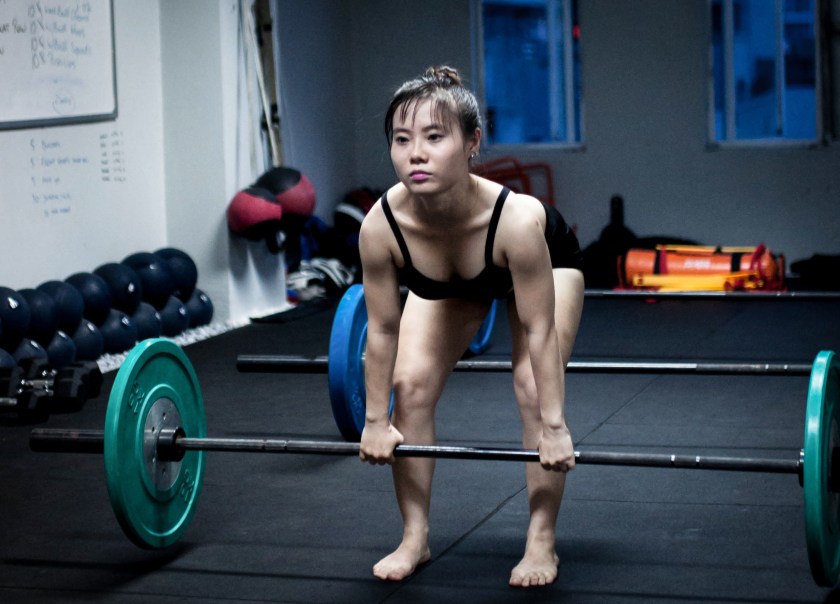 You’ve heard of a regular deadlift, but you may not have heard of a Romanian deadlift. A standard deadlift starts with the barbell on the floor and you lift the barbell up, while a Romanian deadlift starts with the barbell in your hands as you are in a standing position and you lower the barbell down. I’m personally more comfortable with lowering and lifting back up then trying to lift from the floor. I feel like it puts less strain on my back, which is important: when lifting weights of any kind, or doing kettlebells, your back is the most vulnerable place and should be carefully protected by using the best form you possibly can. So how do you get the best form?
- Stand upright with your feet hip width apart, using a standard overhand grip to hold the barbell (both hands over the top of the bar, palms facing you). Keep your knees loose, not locked.
- Keeping your core tight and your back flat, push your hips out behind you as you lower the bar, sliding it against the front of your thighs. Lower until you feel a stretch in your hamstrings: the bar should be just below your knees at its lowest point.
- When you reach the bottom, contract your glutes and hamstrings to straighten your torso back to the original position, pulling your hips back in line with your legs and spine until you’re standing straight.
Here’s me doing 150 lbs (my friend Sue says 135 but it was 150), which is my personal record:
I’m a novice, but I think I did a pretty good job!
Remember to BE CAREFUL when trying any new exercise, and don’t start off heavy: try some reps with just the bar to get your form right and build up slowly over time. Slow and steady wins the race without injury!
Good luck and have fun!

 After about six months or so of using pre-made videos from Fitness Blender to do my butt and thigh strength training workouts, I decided I wanted a longer, more intense dumbbell workout to do on Mondays, when I have a longer time to commit to fitness. I’ve been working on this particular workout for about three months and have switched it up a bit, but I’m really happy with its current state.
 A Measured Life