What the *BLEEP* Are MACROS?!

http://weightlossandme.com/macronutrients-affect-workout/
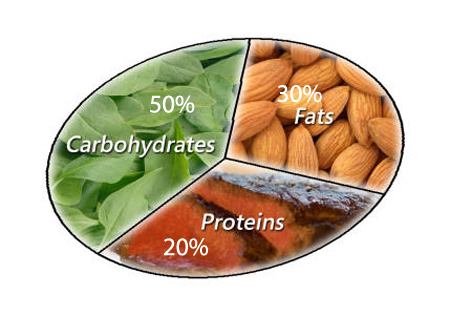
Spinach is totally a weird choice for carbohydrates.

Okay, if you use a website or app to track your food, or you hang out with low-carbers or weight lifters, like you do, you’ve probably heard the word “macros” tossed around once or twice. (As you play this weight-loss game/journey to health you’ll find your vocabulary changes. I suddenly know the names of a lot more body parts than I used to. Now I need to figure out how to use “clavicle” in a game of Scrabble!) So what the *BLEEP* are MACROS, anyway?!

Macronutrients, or Macros for short, are nutrients that provide calories or energy for the body to burn. Depending on the source, there are either 3 or 4 types of macronutrients: protein, fat, carbohydrates and, occasionally, alcohol. For the purpose of diet (and I mean diet as in the food you need to survive, not a diet, as in cutting calories), I’m going to skip alcohol, as it isn’t necessary for the human body to live. Protein, fat and carbohydrates are all vital to the normal, everyday functioning of the human body.

Protein might be the only of the three macronutrients that doesn’t get a lot of negative press. I mean, they sell giant jars of PROTEIN POWDER. (One has been sitting on top of my fridge for almost a year now.) People are encouraged to increase protein intake on a regular basis. Protein is the “cool” macronutrient. Protein is essential for growth: our bodies convert protein to amino acids which (if you recall from high school biology) are the building blocks of life.
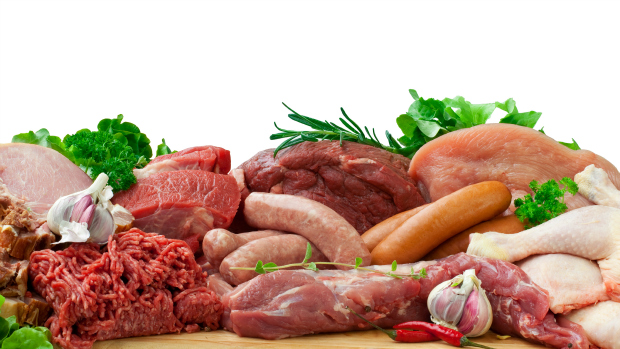
http://bretcontreras.com/how-much-protein-do-you-really-need/
Thousands of vegetarians and vegans are crying out in terror right now.

Protein also helps our bodies produce hormones, repair tissue (really important for strength training), bolster the immune system, and preserve lean muscle mass. Animal sources of protein are complete proteins, containing all the required amino acids, while vegetarian sources of protein are incomplete proteins, so vegans and vegetarians usually require additional supplements to account for the missing amino acids. The USDA recommends 10-35% of daily calorie intake should come from protein, and protein is 4 calories per gram.

Fat is by far the most maligned of the macronutrient family, but it’s only specific fats that are considered detrimental to our health. Saturated and Trans Fats (perhaps you’ve heard of this scamp being removed from foods around the United States) increase your risk for heart disease, but unsaturated fats can help reduce your risk of heart disease. Fat is the most dense source of energy, contributes to satiety, helps maintain cell membranes, provides cushioning to internal organs, and helps the body absorb certain vitamins. Plus, as chefs say, fat is flavor! The USDA recommends 20-35% of daily calorie intake

http://www.womenshealthmag.com/nutrition/good-fat-facts
Healthy fats! (Yes butter is acceptable in moderation, dang it!)

should come from fat, and fat is 9 calories per gram.

Carbohydrates often get a bad rep, like fat. There are a lot of buzz words floating around lately: low-carb, slow-carb, net carbs. Despite what proponents of low carb dieting might want you to believe, carbohydrates are the macronutrients the body requires most. According to the USDA, 45-65% of daily calorie intake should come from carbs. Carbs are easily converted to glucose by the body, which is the main source of fuel. Without carbs, our kidneys, brain, muscles (heart included) and the central nervous system would all cease to function. Carbs are important for a whole host of other reasons, but the long and short of it is that we need them. Carbohydrates are 4 calories per gram.

So now that we know what macros are, what do we DO with them? Well, how you tweak your macro ratios is highly individual. I personally have been using 20/30/50 protein/fat/carb ratio. Why? Well, to be totally honest, it’s what’s recommended on SparkPeople.com and that’s where I track my food. I don’t do low carb, and it seems to work for me. It assures me that I’m getting enough protein to support my weight training, and that I’m keeping my carbs and
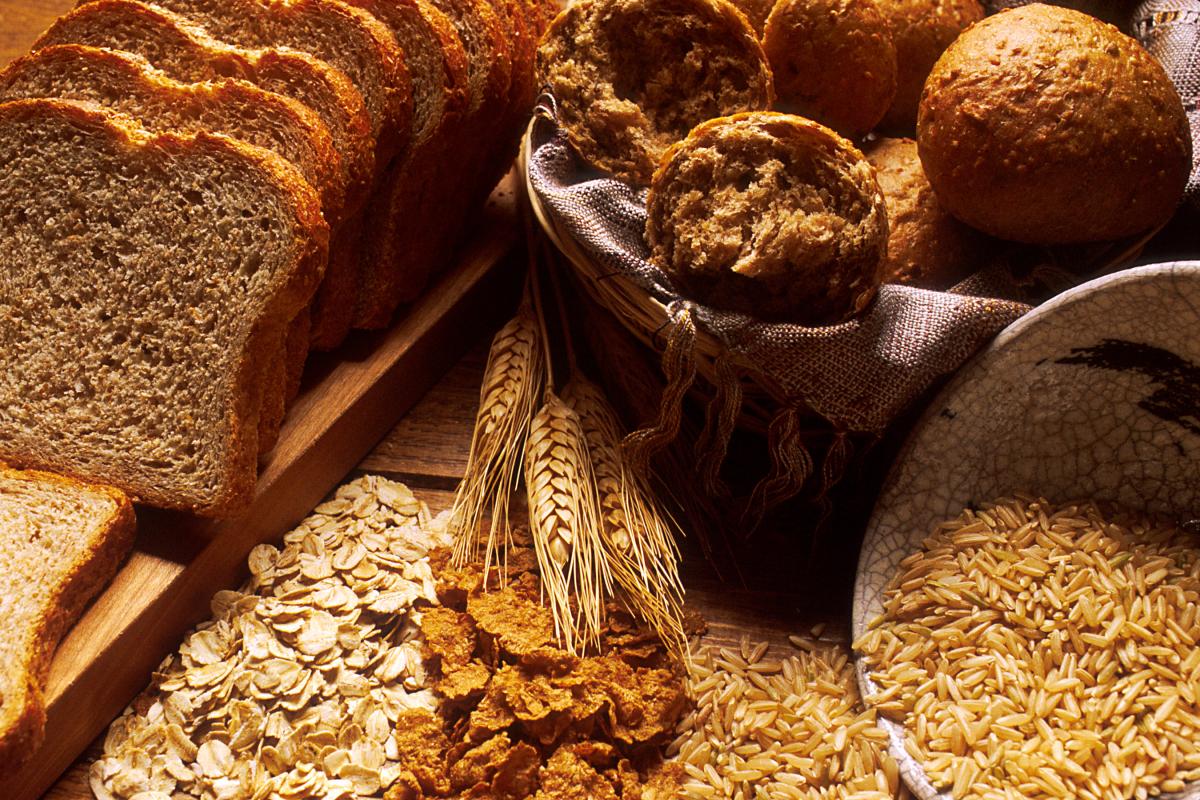
http://www.dfitpt.com/carbohydrates-exposed#.VMbmLVWJOuY
Almost everyone’s nemesis: delicious, delicious carbs!

fat in check. The quality of your carbs and fat is, ultimately, up to you. If you’re low-carb, you’re going to be eating more fat and protein compared to carbs. Human beings are pretty flexible, so as long as you stay within the numbers recommended by the USDA, you should get all the vital nutrients you need for good health, barring any medical conditions that might inhibit nutrient absorption.

Just as always, you need to do what works for you. If you prefer low-carb or paleo, do that. If you prefer to just eat real food and not worry about excluding things, do that. Pick a set of ratios and try it out, but feel free to tweak slightly. The truth is, there is no one answer. (Sorry!) I personally try to cook from scratch several nights per week, but I don’t cut out processed food for snacks if that’s what I want. I generally eat homemade food 80% of the time and other foods 20% of the time, and so far, it’s worked for me, because life isn’t perfection. Nobody’s perfect, and you shouldn’t try to *be* perfect, because this sets you up for failure.

Go out there, be good, and do what works for you!

Want more info? Check out the USDA and McKinley Health Center.
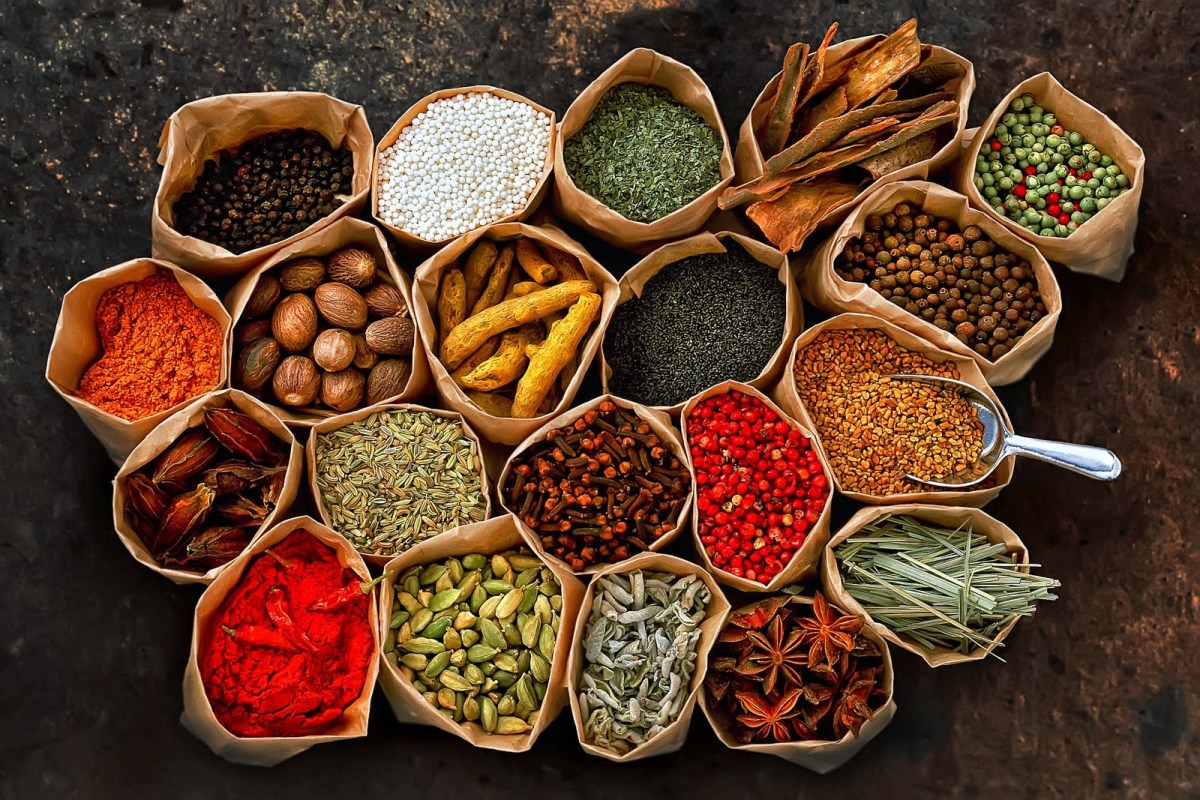
Pantry Staples for the Exotic Kitchen

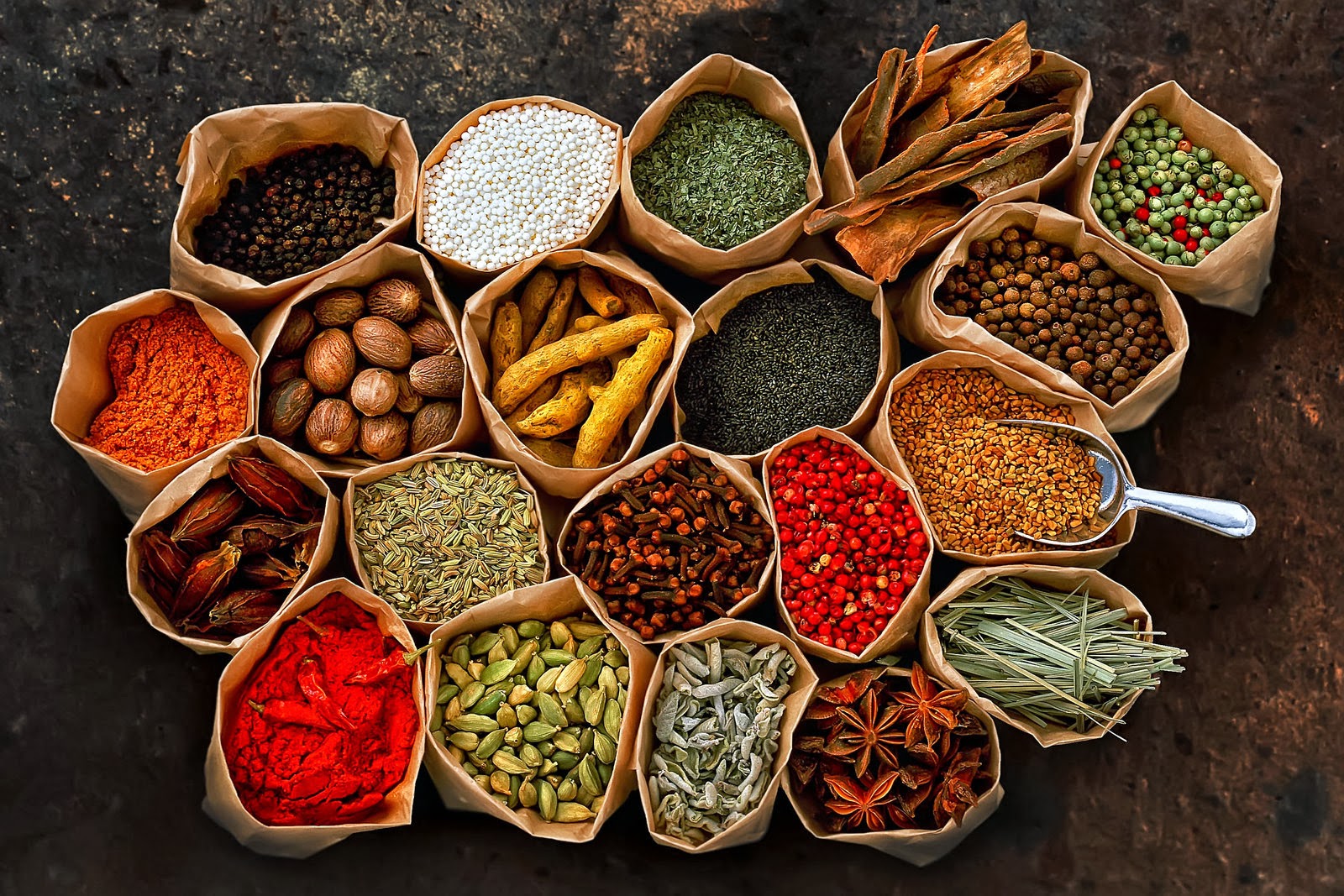
http://culinaryproduce.com/spices-herbs/
The spice must flow.

I don’t know about you folks, but when it comes to food, I crave variety. The story of how I came to love so many world cuisines is a story for another time, but I love cooking exotic dishes at home to save money and calories. I often take a dish I truly love (Chicken Tikka Masala for example) and adapt it for my home kitchen, lightening it and occasionally simplifying it. You can find list after list of normal everyday pantry staples on the old interwebs, so I won’t address those here, but I’m going to list some of the less standard pantry ingredients I keep on hand all the time to throw together healthy, home-cooked dishes that are packed with flavor.

These exotic basics should help you get a head start on cuisines like Indian, Thai, Mexican, and a variety of others. A lot of these items can be found in your standard grocery store, but to save money and get fresher ingredients, take some time to check out your local ethnic stores. I’m lucky enough to live in an area that’s quite diverse, so I have a choice of a generic Asian market, a Korean market, an Indian market and various Hispanic markets to choose from. If you don’t have these options, there are a number of websites that sell the more exotic spices, as well as your standards for far less than you would pay for McCormick (I avoid McCormick like the plague because of the prices, especially since Badia is so much less for the same items). I’ve personally used The Spice House and My Spice Sage for mail order spices with great success.

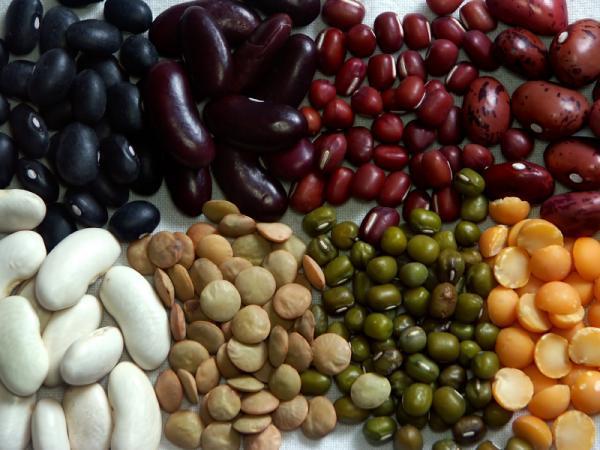
http://modernmothercubbard.blogspot.com/2014/09/cooking-dried-beans.html
You know what they say about beans, don’t you?
Good for the heart.

In the Cabinet

  • Soy Sauce (Both dark and reduced sodium)
  • Shao Xing Rice Wine
  • Fish sauce
  • Rice Vinegar (Seasoned and Unseasoned)
  • Balsamic Vinegar (I have 2 or 3 varieties at any given time)
  • Sesame Oil
  • Peanut Butter
  • Red Lentils
  • Dried Beans (Black, Kidney, Pinto, Split Peas, Chickpeas)
  • Canned Beans (White/Cannelini, Black, Kidney, Pinto)
  • Canned Tomatoes (Diced, Puree, Paste)
  • Fat Free Evaporated Milk
  • Canned Tuna
  • Farro
  • Wheat berries
  • Millet
  • Bulgur wheat
  • Barley
  • Red Quinoa
  • Rice
  • Jasmine Rice
  • Basmati Rice
  • Craisins
  • Dried Apricots
  • Dates
  • Prunes
  • Peanuts, dry roasted
http://www.asiantraders.co.in/fresh-ginger.htm
Fresh ginger also makes great tea if you have a tummy ache.

In the Fridge

  • Fresh Ginger
  • Fresh Cilantro
  • Lemongrass
  • Thai Red Curry Paste
  • Chili Garlic Paste
  • Parmesan Cheese
  • Plain Greek Yogurt
image
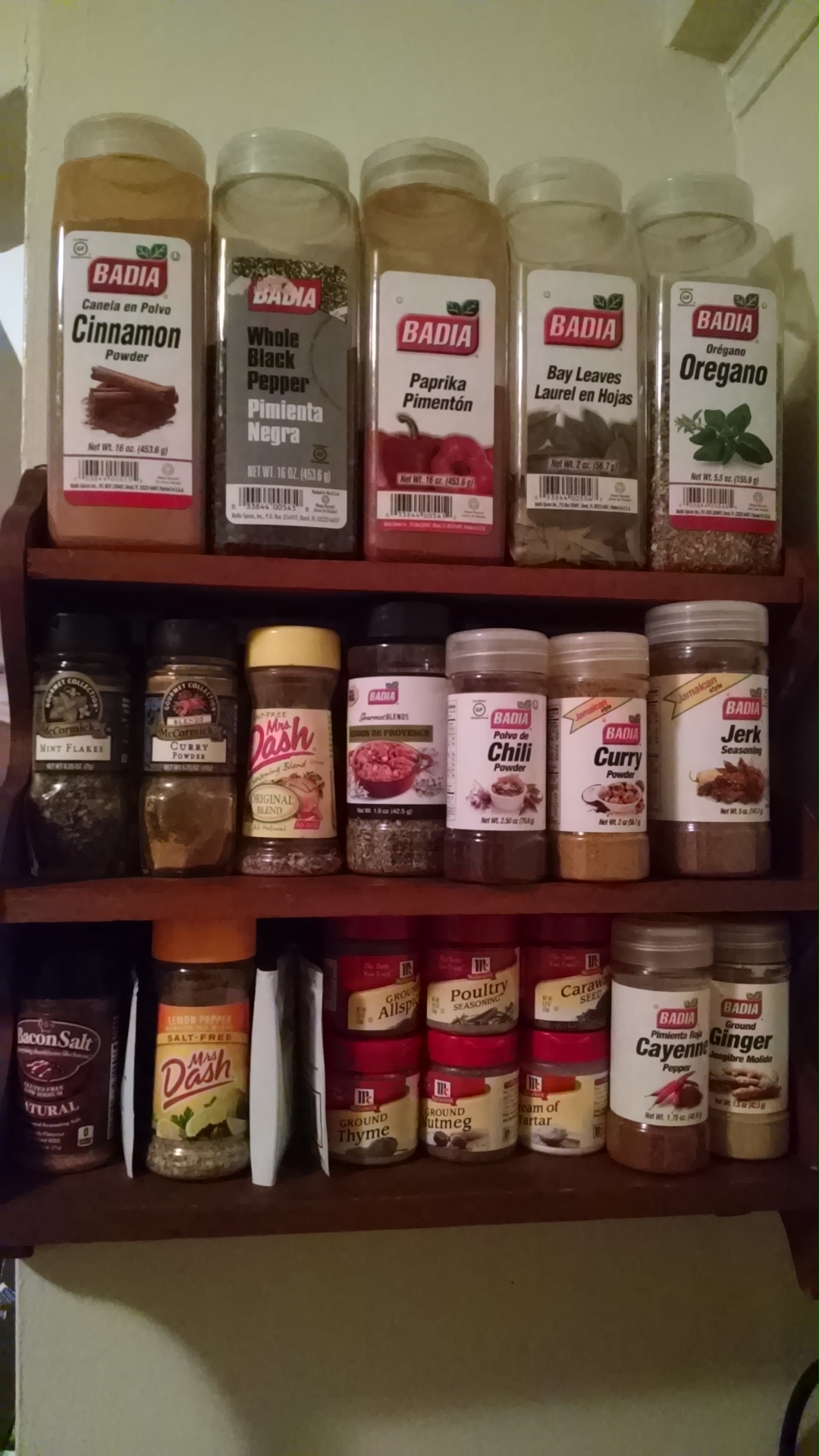
Only one of my spice locations!

In the Spice Rack

  • Bouillon (Chicken & Beef)
  • Powdered Sumac
  • Bay Leaves
  • Cinnamon
  • Cardamom (Green & Black)
  • Star Anise
  • Chinese Five Spice
  • Crushed Red Peppers
  • Garlic Powder
  • Chili Powder
  • Cumin
  • Oregano
  • Curry Powder
  • Cloves
  • Allspice
  • Dried Chiles
  • Powdered Ginger
  • Cloves
  • Paprika
  • Cayenne Pepper
  • Jerk Seasoning
  • Sesame Seeds
http://en.wikipedia.org/wiki/Madeira_wine

In the Liquor Cabinet

  • Marsala
  • Madeira
  • Sherry

Add these items slowly to your standard pantry items and you’ll be cooking chicken vindaloo and pad thai in your home kitchen in no time!

Meal Planning on a Budget: Part I – Inside the Grocery Store & At Home

This is part II of a 2-part series on meal planning on a budget. You can read Part I here.

You’ve made your menu and your grocery list. You’ve checked your pantry and printed your coupons. You’ve maybe even grabbed some reusable grocery bags to bring to the store with you, and you’ve made it into the grocery store at last!

In the store:

http://www.inshapeindiana.org/93.htm (Shop the perimeter graphic)
Shop the perimeter!


  1. Slow down. Start at one end of the store and try to grab everything you need as you walk. I start in produce (I usually only get bananas, as I’ve gotten most of my produce at a produce-only market), then do dairy, then dry goods, meat, and lastly, frozen. This keeps your frozen stuff frozen solid. Now I don’t spend much time in the center of the store, because I shop the perimeter, but if you plan on spending extra time in the center aisles, you might want to do those first, then hit the perimeter. Since I’m spending a maximum of 30 minutes or so in each store to shop for 2 people, I just start at one end of the store and cherry pick the center aisles if I know I need something.
  2. Stick to your list. Impulse buys are a) expensive and b) bad for your health. If you planned your food out well enough for the week, including your snack foods, you won’t need to browse all the other stuff, because you’ll be buying all that you need. Pro Tip: It’s okay to buy an item on a whim if it’s a particularly good deal and it’s something you’d normally buy. This week I bought a half-shank ham for 99 cents a pound. Regularly it was $2.39 a pound, so I saved almost 60%. And ham is one of those amazing meats that you don’t even need to season, it’s delicious plain. It’s also my second favorite meat of all time, just after corned beef. Yum.

    This list is making me hungry!
    This list is making me hungry!
  3. Don’t forget those pesky unit prices! It may not be less expensive to buy a larger size every time, and it may just be less expensive to purchase a name brand if it’s on sale, as opposed to the store brand at regular price. Flexibility is really important here.
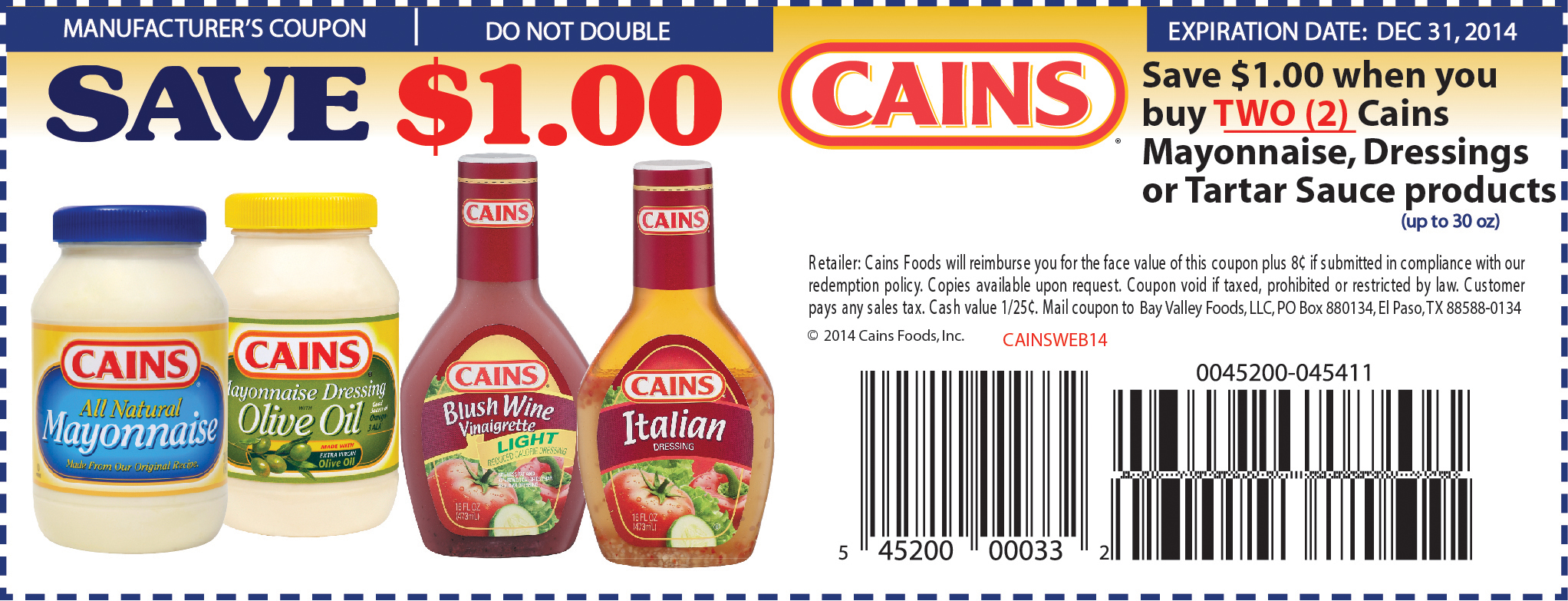
  4. Hand over your coupons! If you have them, give them to the cashier for goodness’ sake! Otherwise what good are they?

    http://www.cainsfoods.com/cainscoupon/coupon.php
    Hand ’em over!
  5. Pay attention to the prices as the items are scanned to make sure you a) got the right items that were on sale and b) they scanned correctly. If they scan incorrectly, be nice about it: your cashier didn’t enter the prices into the database, and they most certainly don’t have the prices of everything memorized. Don’t blow your top because of an easily fixable mistake. Example: last week I noticed a weird charge for $2.08 ASPAR on my bill at Walmart. I mentioned it as soon as I saw it, and the clerk was just as confused as I was about it, and voided the item. No big deal. It was a weird glitch, she fixed it, problem solved.

At home:

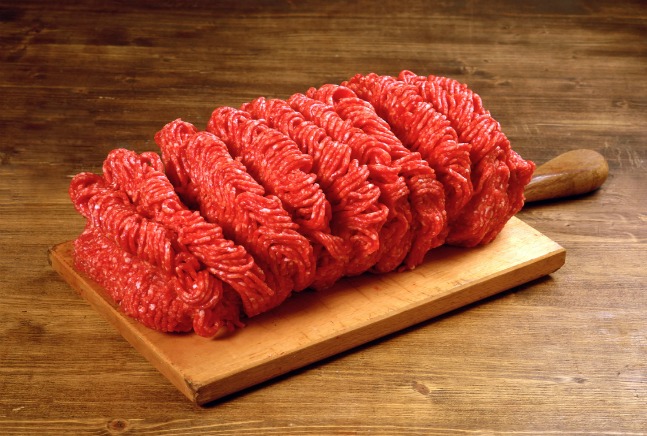
http://www.joyofkosher.com/2012/05/ground-beef-basics/
Break down those bulk packs yourself!
  1. Separate your bulk packs of meat out into freezer-ready packs in a portion size you frequently use. For me, it’s 1-lb bags. Don’t forget to keep out what you’ll need for this week’s recipes! Label the meat with the weight, the type, and the date. (I don’t do this, because I’m lazy, but it makes it really difficult to figure out if I’m pulling out chicken thighs or pork chops, because they look pretty similar when they’re frozen into a solid block. I would seriously do this more often but I’m always misplacing my Sharpie. Lame.)
  2. Use your leftovers. If you find you have a lot of older produce that’s still good but might be a bit limp or just generally looks unappealing, make soup! You don’t need a recipe for soup, just cut up your veggies, throw them in some broth, toss in any leftover meat scraps you have lying around, or maybe some small pasta, etc. Spice it up and you’re good to go! Pro Tip: Freeze things that might might make delicious stock later. I always keep poultry carcasses, ham bones, and the ends of veggies that are good enough for stock but not good enough for regular consumption in bags in my freezer. When I get enough, I make stock!

    http://www.popsugar.com/food/Cupcake-Filled-Cupcakes-Other-Food-Fun-From-Web-11123222
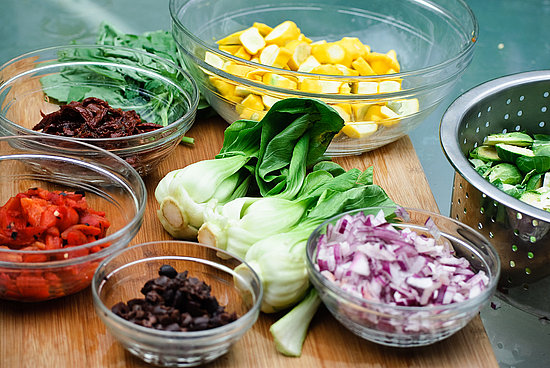
    Chefs call this pre-prep “mise en place”, which translates to “putting in place”.
  3. Prep if you need to. If you’re particularly busy, or you have a recipe that you know is going to take a little extra time, see what you can prep before hand. Are you going to need a lot of chopped onions this week? Chop them up now and put them into a sealed container in the fridge. You can take what you need from it all week. Peeled and cut up winter squash lasts for several days in the fridge, and you can roast several sweet potatoes at the beginning of the week for use down the road. Cook large batches of rice, quinoa, or dried beans (I use my slow cooker for this). Leave out what you need and freeze the remainder for later weeks.
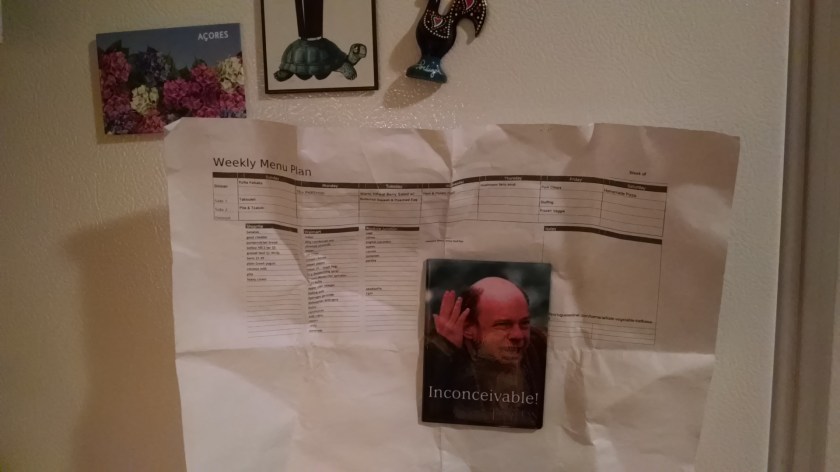
  4. Hang your meal plan in the kitchen. This gives you easy access to your meal plan and allows you to see in advance what you’ll be cooking for the next day or so, so you can make sure you pull anything you need from the freezer in time. (I have had many panics in regards to still-frozen packs of meat I’d forgotten about until the last minute.) If you’re like me, a tree-killer, you can also print your recipes and hang them up with your menu, so everything’s ready to go when and where you need it.
    You keep using that word, I do not think it means what you think it means.
    You keep using that word, I do not think it means what you think it means.

    So do you feel like an expert in smart shopping? It might take some time to get used to the methods I’ve used here, particularly if you’ve never given a thought to watching how much money you spend on groceries. Also, you’ll note that I cook every night of the week. This might not work for you, but for me it kills two birds with one stone: I save money on eating out in restaurants, and I am much more in control of the calories I ingest. This doesn’t mean I never go out to eat! I do, I swear! It just means when I do, it’s special, an event. It’s usually and event shared with family or good friends, and not just something to do because we don’t feel like cooking. Everything in moderation, including moderation, they say. I’m always game for new tricks and tips, and am interested in the concept of batch cooking, so if you have anything to add, please tell me in the comments!