Coconut Butter + Chocolate Hazelnut Pancakes

A few weeks ago I saw something intriguing on Pinterest. (To be fair, there is a lot of intriguing stuff on Pinterest. It’s a rabbit hole of intriguing.) It was a tutorial on how to make coconut butter. (NOTE: Coconut butter is NOT the same thing as coconut oil. Coconut oil has had all of the solids removed, while coconut butter leaves them intact.) Now I’d heard of coconut butter before from recipes on various paleo websites, but I’d never eaten it. However, I adore coconut. While it may not be my desert island food (this is probably okay, since there’s a greater possibility of a desert island having coconuts than peanut butter or pizza), I probably eat something coconutty at least once a week. So the idea of coconut butter sounded amazing to me. This morning I finally made it!

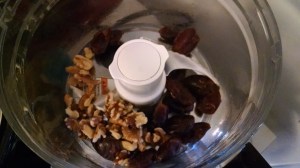
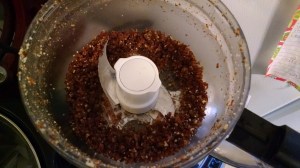
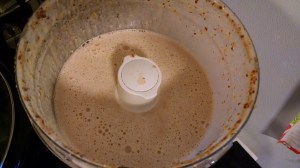
The “recipe” is simple: All you need is flaked, unsweetened coconut and a food processor. I got a bag of Bob’s Red Mill for about five bucks. There really isn’t even much of a process, except to blend and scrape down repeatedly for about 20 minutes. You’ll see the progression here:

Coconut butter never really loses it’s grit. It’s the absolute essence of coconut, without the sweetness. I think I could really love this, given time to adapt. A 12 oz by weight bag of coconut flakes made 12 oz. by volume of liquidy coconut butter! (Interesting, huh?)

The plan was to serve this drizzled on pancakes with fresh fruit. Well, the universe has a funny way of screwing with a human’s measly “plans”. The strawberries I’d purchased were moldy. Boo. The good news was I had frozen fruit in the fridge! (I am nothing if not prepared for emergencies.) So next up were the pancakes.

Something I often miss, but never find “worth” the calories, is Nutella. I wondered if I couldn’t make pancakes with a similar flavor profile. Now, I’ll be honest: I grew up eating Aunt Jemima pancake mix. The kind where you just add water. I still love them! But I didn’t think the mix would work well with add-ins, so I went looking for a scratch pancake recipe. I found Old Fashioned Pancakes from Rachel Schultz. Easy enough, and I had all the ingredients on hand. I knew I could sub some cocoa powder for flour without any real consequences, so I switched out 1/4 cup of the flour for unsweetened cocoa powder, and added in chopped hazelnuts and chocolate chips. Easy! Here’s what I came up with:
IMG_20150407_180944007

Chocolate Hazelnut Pancakes

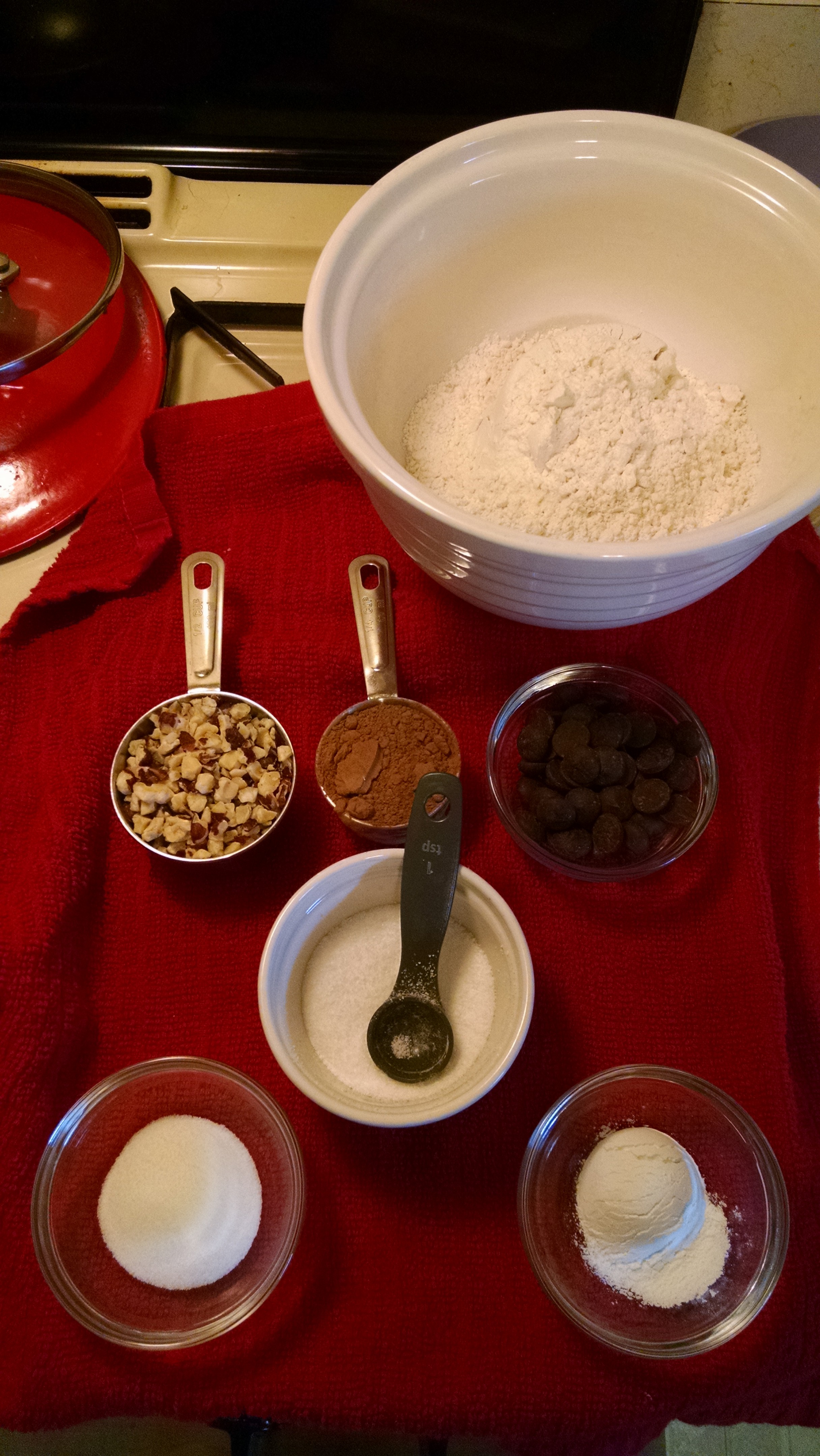
IMG_20150407_083209173The Dry

  • 1 and 1/4 cups flour
  • 3 teaspoons baking powder
  • 1 teaspoon salt
  • 1 tablespoon sugar
  • 1/4 cup cocoa powder
  • 1/2 cup chopped hazelnuts
  • 4 servings dark chocolate chips

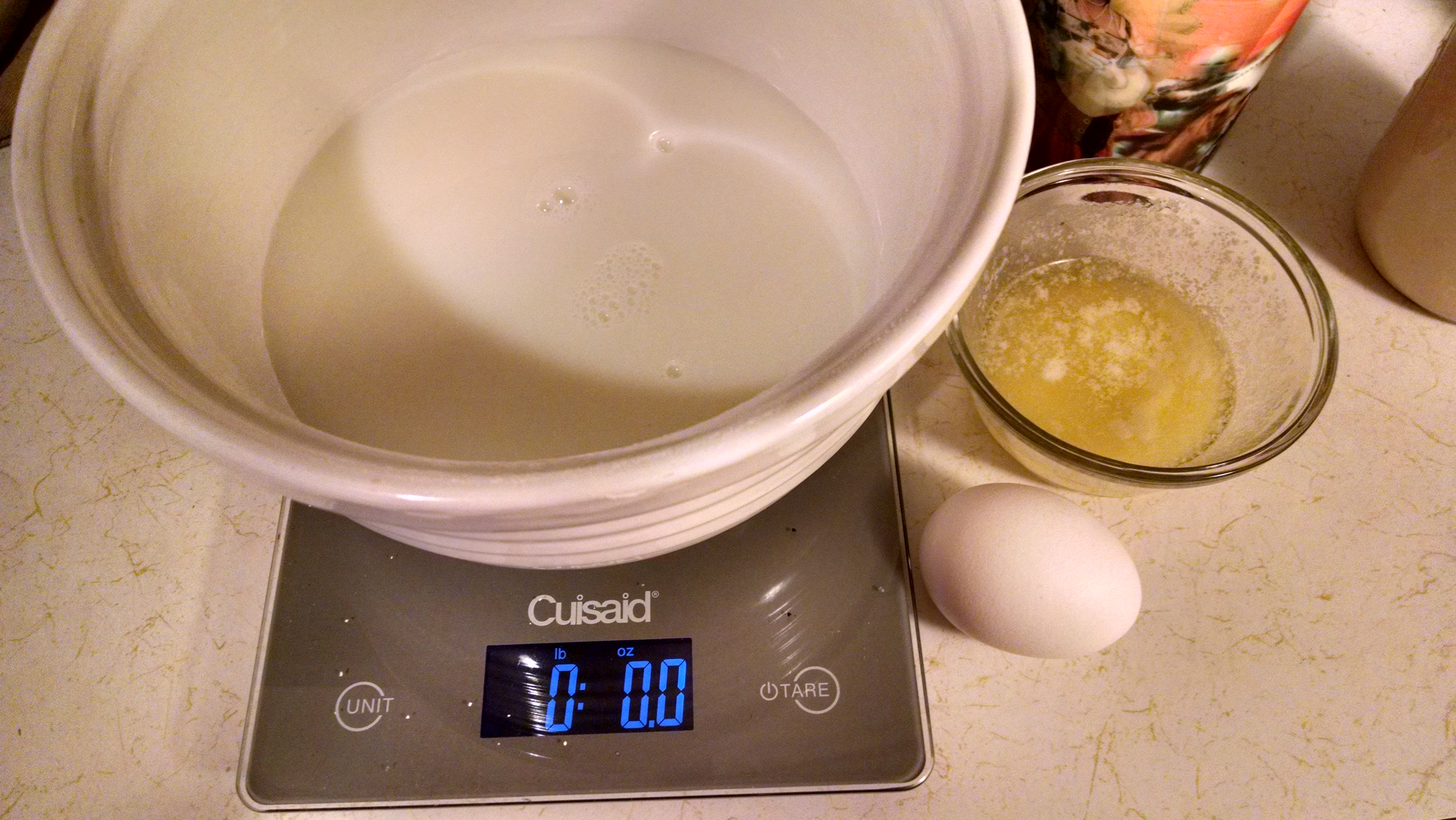
IMG_20150407_173301701_HDR


The Wet

  • 1 and 1/4 cups milk
  • 1 egg
  • 3 tablespoons butter, melted
  • 1 teaspoon vanilla

Directions

Put flour through chocolate chips into a food processor and pulse until hazelnuts and chocolate chips are ground fine.

Whisk together liquid ingredients in a large bowl. Stir in dry ingredients until a smooth batter is formed.

Heat a skillet over medium heat. Pour 2 tablespoons batter into circles and flip once bubbles have burst.

Serving Size: Makes 8 servings.

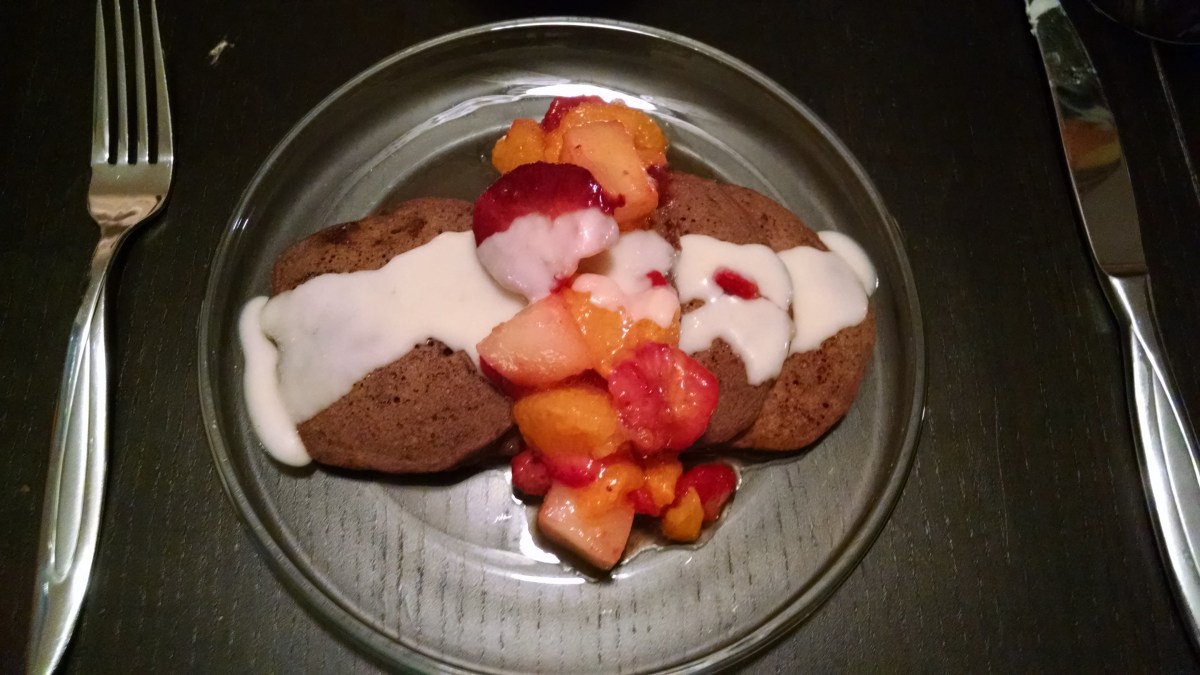
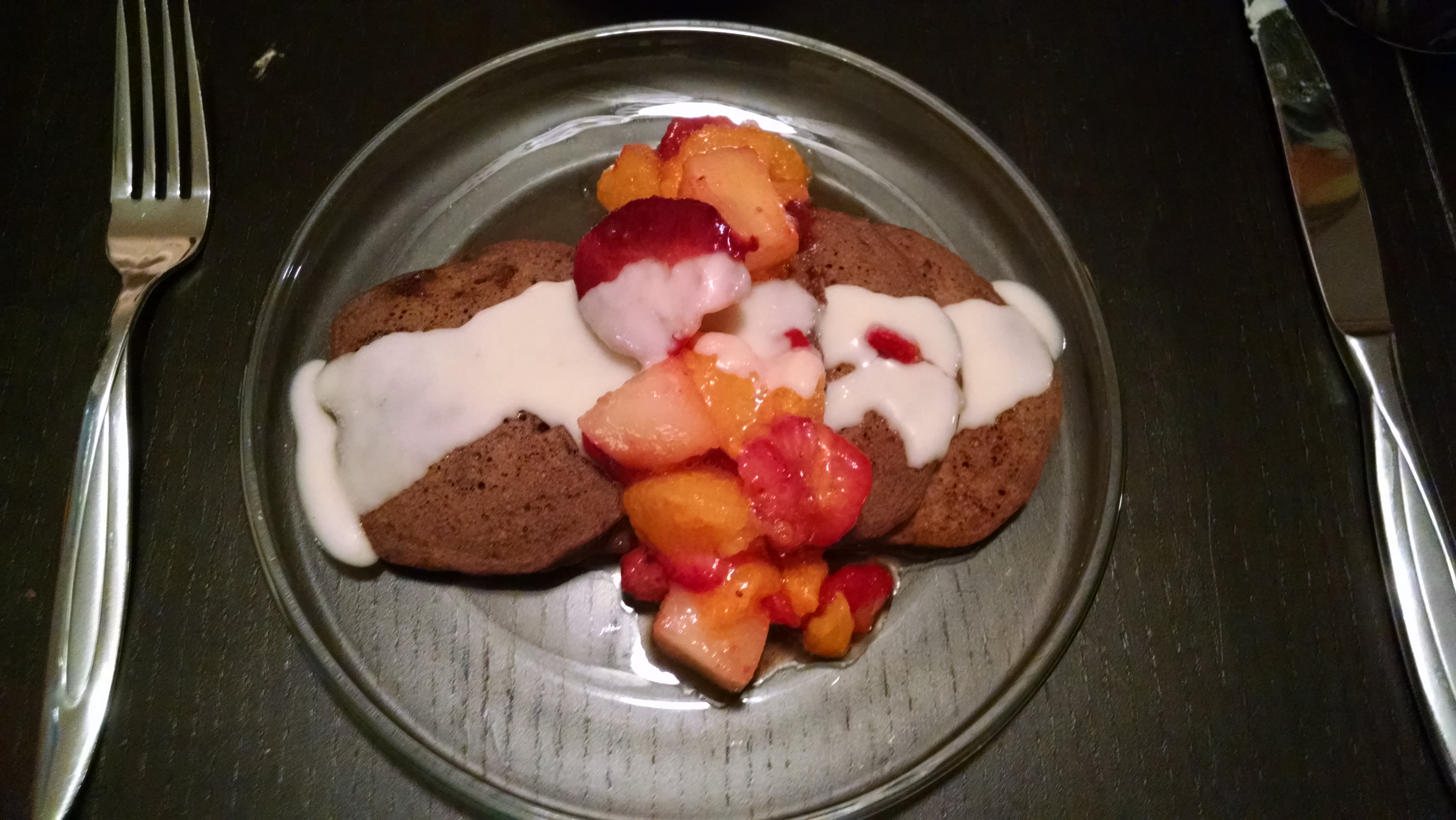
I topped my stack with a tablespoon of liquid coconut butter and thawed frozen mixed fruit (strawberries, pineapple and mandarins). SO YUM. The Nutella taste was there, if mild, and the pancakes themselves were barely sweet, but the fruit and coconut butter made the perfect combination of toppings.

So what else can you use coconut butter for?  I’ve seen it suggested that it just be eaten from a spoon, spread on toast, make vegan mayo, vegan chocolate magic shell, sub it for butter in baking, etc. The one that intrigues me the most? Dipping fresh fruit in it then refrigerating it so it forms a shell. Imagine for a moment, marinating fresh pineapple in a hint of rum, then dipping it in warmed coconut butter and setting them in the fridge. A pina colada in “healthy” format! (Note to self: TRY THIS.) The sky’s the limit!

Have you used coconut butter or made it yourself? Leave me a note in the comments!
Carrot Cake Spoon Bread: An Experiment

IMG_20150329_182426442_HDROkay, it’s a stretch, but I have been thinking about carrot cake lately. Carrot cake: the surprisingly unhealthy conglomeration of bright orange vegetable, nuts, tangy cream cheese and lots and lots of sugar. Think about it: it’s a dessert made around a VEGETABLE. So why carrot cake in early April? Well, Easter is rapidly approaching, and with Easter comes bunnies, and bunnies eat carrots, and carrots make carrot cake. Got it? Good, I’m glad you’re coming with me on this one. (Also I noticed the other day while grocery shopping that carrot cakes are everywhere, so maybe the idea got into my head subconsciously!) A quick Google search revealed a fascinating article on Cake Spy regarding the history of carrot cake: carrots have been used in desserts as far back as the middle ages, and were often used in times of sugar rationing. It makes sense, really!

But honestly, as much as I adore carrot cake, it’s caloric density and relatively complicated ingredients list makes it an unlikely dessert option in our household. But I’ve had a hankering for it since an ill-advised hunk of truck stop carrot cake on a lonely trip to Virginia cost me nearly 500 calories and the lingering taste of chemicals in the back of my throat for nearly 100 miles of 95 South. (Yes, an emotional crisis cause a SEVERE lack of snack judgment here. I should have just gotten a candy bar.)

http://smdconline.1freecart.com/i/190730/nemos-carrot-cake-12-3z.htm
I have tasted regret and gasoline. Never again.

So I wanted to make a carrot cake flavored dessert that was much, MUCH lighter than original, portion controlled, but still had a lot of the flavor of carrot cake. But what about the TEXTURE of spoonbread? I’ll admit, I am a sucker for Don Pablo’s Cornmeal Spoon Bread: the almost creamy texture of intensely corn-flavored cake-y pudding. Is it sweet? Is it savory? Yes. YES. So I really wanted to capture the texture of that side dish with the sweet-spice-infused tangyness of carrot cake. (Is your mouth watering yet? Mine is. Excuse me while I grab a paper towel.)

In thinking about the ingredients, I researched carrot cake recipes. Carrot cake is essentially a spice cake studded with shredded carrots, nuts, sometimes raisins and sometimes pineapple. The spices were important to me: just cinnamon wasn’t going to cut it. I needed a bit of clove, nutmeg and ginger as well. Carrots, of course, are essential, and nuts. I decided on walnuts, due to The Hubs sensitivity to pecans. But raisins? I’ve never really been a huge fan of raisins, and we don’t keep them in the house because of their toxicity to dogs. (Yes, I’m paranoid I’m going to accidentally kill my dog with raisins.) So what can give me sweetness, with the molasses-y depth of raisins? Dates! And as for the pineapple, I just decided to skip it. Of course, you also need vanilla, baking powder, my new best friend evaporated skim milk, and cornmeal to thicken it up.

So, I trimmed and peeled about 1 1/2 lbs of carrots, then shredded them with my food processor. (Do you remember the movie Mannequin from the 80s? There was a scene where the bad guy is throwing some old mannequin parts into a giant shredder. Watching the carrot remnants spinning around on top of the shredding disc reminded me of this!)

http://www.gofugyourself.com/fug-the-fromage-mannequin-07-2013
Man, these carrots just do not want to be shredded.

I then replaced the shredding disc with the regular old blade, and ground up the dates with the walnuts until crumbly. I added the cornmeal in next, and blended that all together for 30 seconds or so, then poured the evaporated milk in through the top til it was all blended smoothly. I poured that into a bowl and poured in the remainder of the ingredients, stirring with a spatula to combine thoroughly. Then I poured it into an 8 x 8 pan lined with parchment paper (parchment and I are besties) and popped it into a 325 degree oven for 40 minutes.

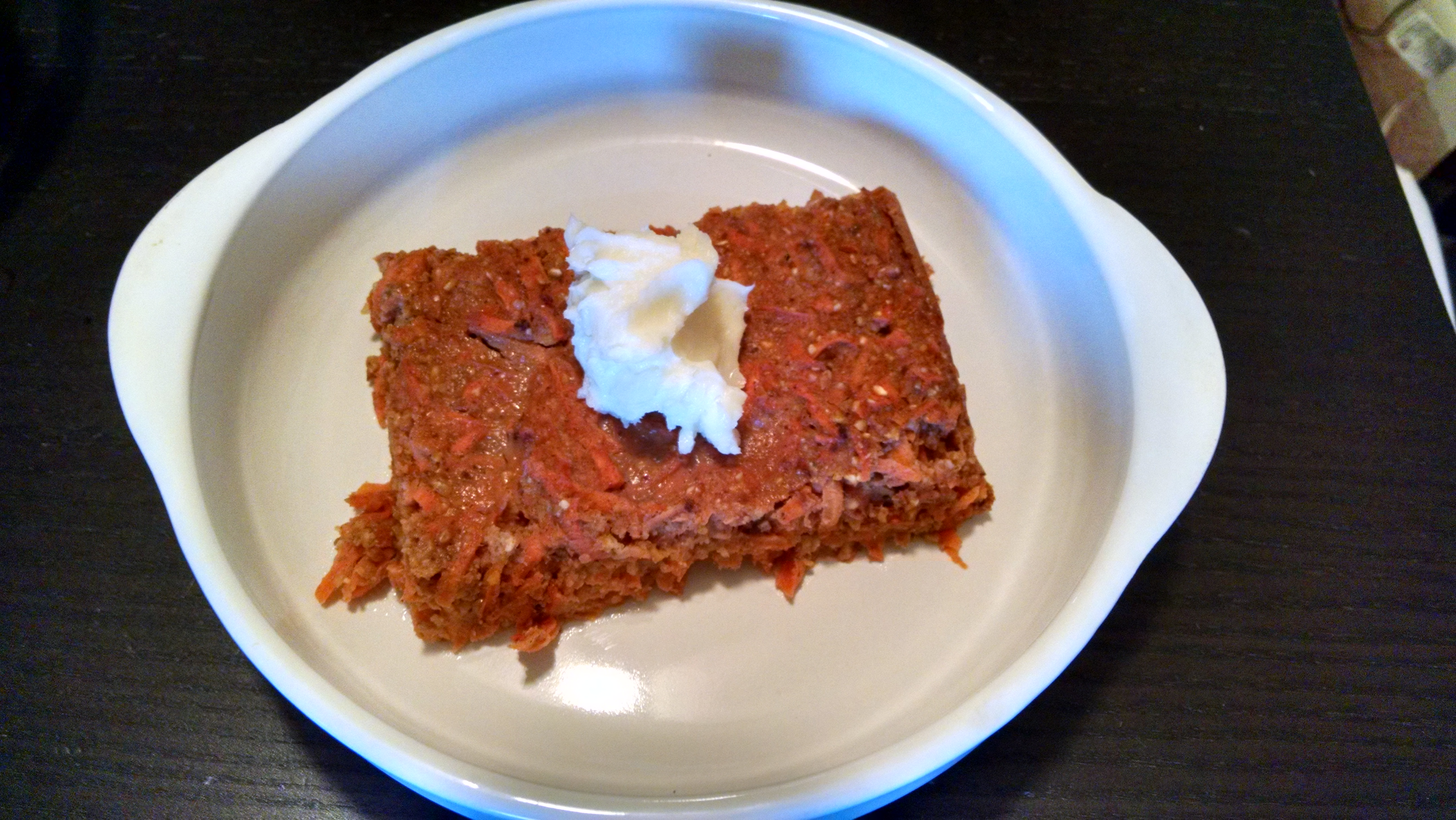
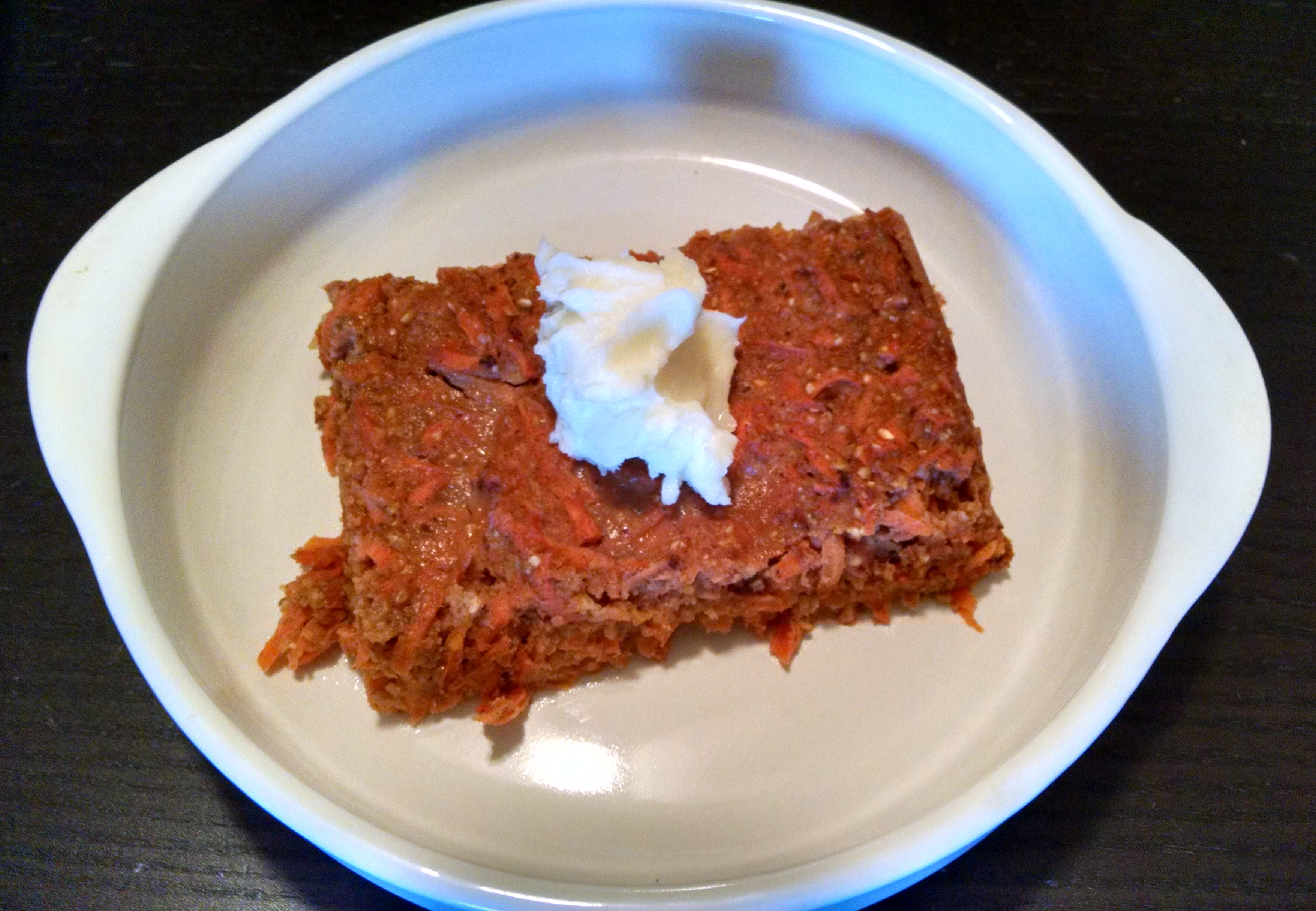
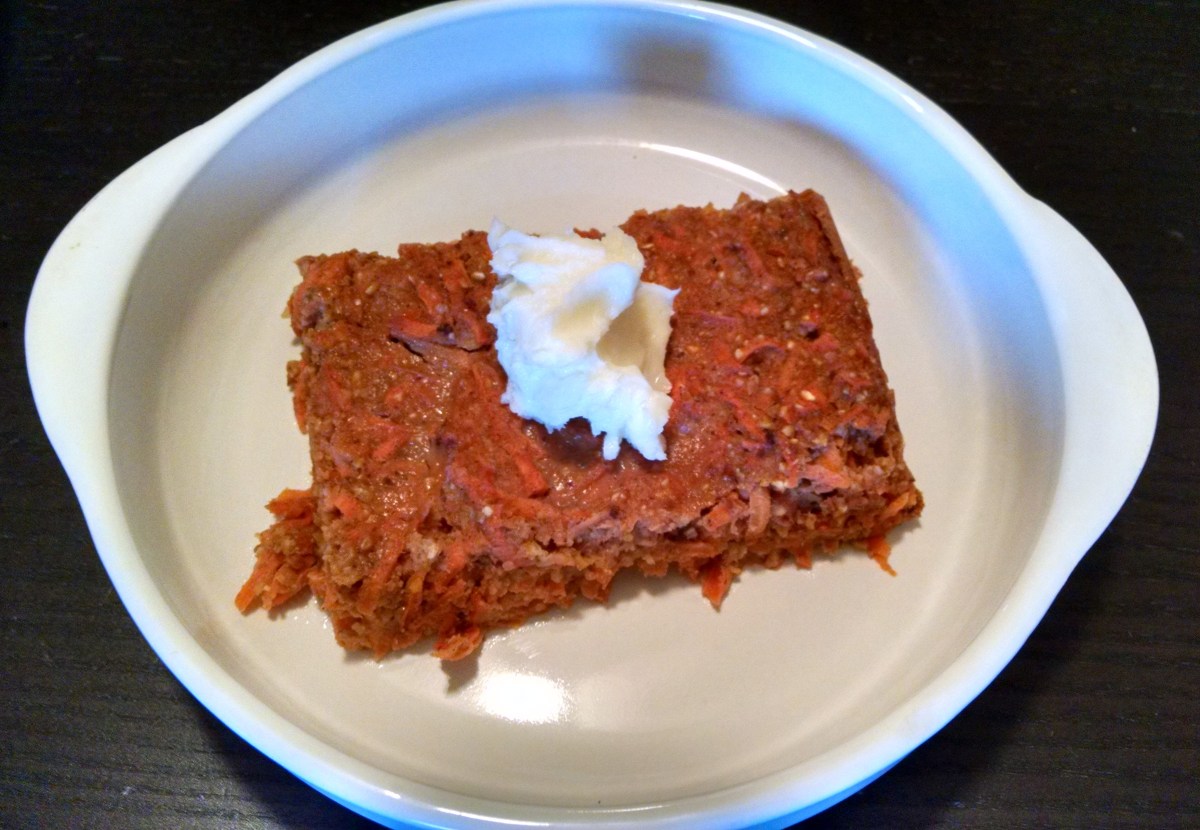
Lastly I blended two ounces of full fat cream cheese with 1/4 cup of powdered sugar and whipped it with a fork until smooth. I let the spoonbread rest for about 30 minutes before removing it from the oven, so it was warm but not piping hot. It cut easily into 6 pieces, so it wound up being a little bit less like a spoon bread and a little more like a brownie, which is a-ok with me! I put a small dollop of cream cheese icing on top, and dug in.

THIS TASTED EXACTLY LIKE CARROT CAKE. (Okay, I know that was the point, but…SUCCESS!!) The texture was not exactly what I’d hoped for, but it was fine. The “cake” bit was slightly dense, and you could really feel the texture of the shredded carrots and sometimes the nuts. It was sweet, but not overly sweet, and the tang of the cream cheese really pulled it together. I give it 8 out of 10 stars, and that’s only because the texture isn’t what I hoped for. And at TWICE the size as the truck stop carrot cake but HALF the calories (and without that wonderful petroleum aftertaste), it’s almost healthy! Each piece is less than 250 calories but feels naughty!

Yes, vegetables can feel sinful!

Carrot Cake Spoonbread (Serves 6)

Ingredients:

  • 1/2 cup dates
  • 1 oz. walnuts
  • 1/2 c. cornmeal
  • 12 oz. evaporated skim milk
  • 4 cups grated carrots
  • 1/4 tsp diamond crystal kosher salt
  • 1/2 tsp baking powder
  • 1 tsp. vanilla
  • 1 tsp. cinnamon
  • 1/2 tsp. grated fresh ginger
  • pinch ground cloves
  • pinch nutmeg
  • 2 oz. cream cheese
  • 1/4 cup powdered sugar

Directions:

Preheat oven to 325 degrees.

In a food processor, pulse dates and walnuts until finely ground. Add cornmeal and blend until crumbly. With food processor running, slowly pour in evaporated milk and run until smooth. Pour into a bowl and stir in carrots, vanilla, ginger, baking powder, salt and spices. Pour into a parchment lined 8×8 baking dish and bake for 30-40 minutes, or until set.

Allow to cool 30 minutes. In the meantime, blend cream cheese and powdered sugar. Serve warm with a dollop of cream cheese frosting.

http://www.wannasmile.com/2013/03/happy-easter-from-a-boston-terrier-in-a-bunny-suit/
*sigh* Happy Easter. Whatever.

Eating in Season: Spring!

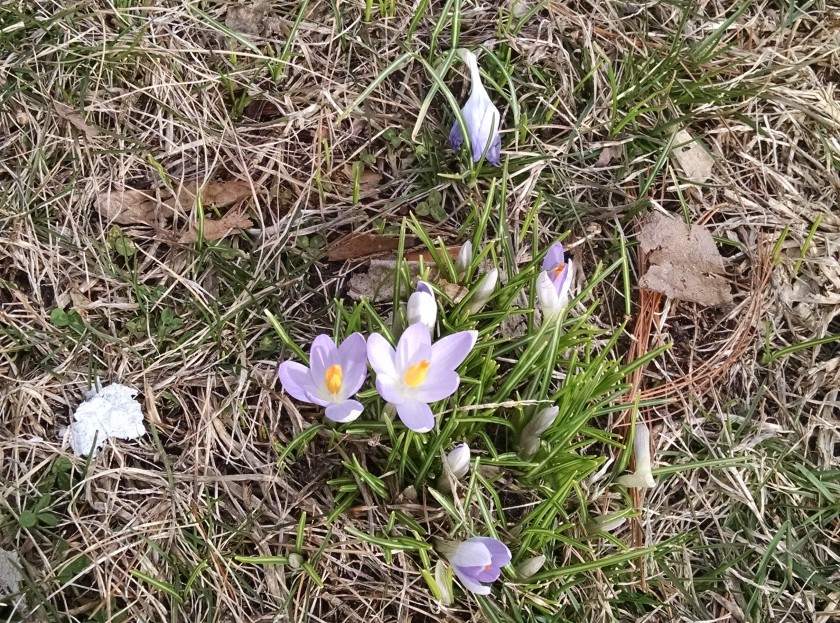
IMG_20150316_160521406Spring has arrived in southern New Jersey: I found my first cluster of crocuses the other day on a walk to the local WaWa. Considering we had nearly five inches of snow on March 20th, this is good news. It’s been a long, cold winter, and I’m looking forward to ditching winter fruits and veggies in favor of those that come in spring. Begone potatoes and hard winter squash! (Okay, okay winter squash, don’t cry, I’ll always love you.) Begone clementines, pomegranates and pears! ALL HAIL THE ARRIVAL OF SPRING!
http://www.freestockphotos.biz/stockphoto/16040Spring brings my #1 favorite vegetable: asparagus! I was never really a picky eater. We always ate all sorts of veggies, and I inhaled broccoli (with or without cheese sauce). As I’ve aged, I’ve learned to really enjoy a perfectly cooked tender crisp spear of delicate asparagus. My favorite way to cook it is *gasp* MICROWAVED. Simply trim the spears of the tough, woody ends, wrap in a few dampened paper towels, and microwave for 3-5 minutes on high, depending on thickness. No salt, no butter, no nothing except a perfectly cooked vegetable.

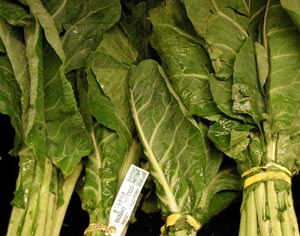
http://www.pvga.net/productpages/pvga_collard.htmlAlso, in writing this entry, I discovered that collard greens are a spring vegetable! Now I love collard greens, but the way I prepare them may just be total BLASPHEMY. I cut the greens into ribbons and toss them all into a big pot of water that I’d been simmering with a smoked turkey tail and THAT’S IT. I simmer those greens until they’re just tender, but not falling apart to mush, because I like texture. Are you getting the theme here? Simple is better!

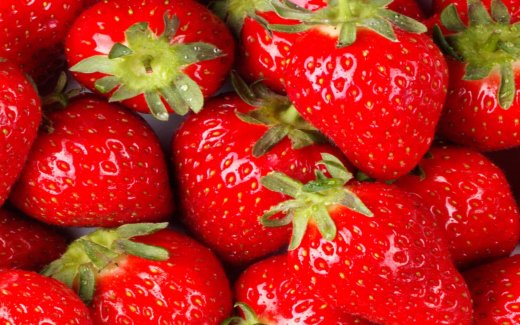
Lastly, STRAWBERRIES!! (Are there people who don’t like strawberries? I don’t know any.) Quick story: when I was a little girl, my adoptive mom used to take me to this place called the Crab Shack. We’d sit at a table and http://www.free-picture.net/fruits/sweet-strawberries.jpg.htmlcrack open crabs and we’d always finish the meal with fresh strawberries served with sour cream and turbinado sugar for dipping. Sure it may sound odd, but the combination is to die for. Hmm, I should have bought some this morning to have over my toaster waffles with light chocolate syrup. Mmmm. (The ideas just keep on coming!)

There are a ton of other springtime fruits and veggies that will be in their prime in the next few months (from http://localfoods.about.com/od/whatsinseason/a/SpringFruitVeg.htm):

  • Apricots come into season towards the end of spring in the warmer areas where they grow.
  • Artichokes have a second crop in the fall, but the main harvest takes place in the spring when the largest thistles are available. Look for artichokes with tight, compact leaves and fresh-cut stem ends.
  • Arugula (a.k.a. rocket) is a cool-weather crop. Long days and warm weather make it bolt, or flower, and bring an unpleasantly bitter flavor to the leaves. Wild arugula is foraged in spring and again the fall. Cultivated arugula is grown year-round, thanks to coastal, temperate growing areas and winter greenhouses.
  • Asparagus is harvested from March through June, depending on your region. Note that thickness in no way indicates tenderness, which is related to how the plant is grown and how soon it is eaten after harvest rather than spear size.
  • Beets are in season in temperate climates fall through spring, and available from storage most of the year everywhere else. Fresh beets are often sold with their greens still
  • attached.
  • Cardoons taste a lot like artichokes; look for firm, heavy-feeling specimens.
  • Carrots are harvested year-round in temperate areas. True baby carrots—not the milled down versions of regular carrots sold as “baby carrots” at grocery stores, but the immature carrots farmers pull from fields to thin the rows—are available in spring and early summer.
  • Chard and other greens grow year-round in temperate areas, is best harvested in late summer or early fall in colder areas, and fall through spring in warmer regions. Like allcooking greens, chard turns bitter when the weather gets too hot.
  • Cherries are ready to harvest at the end of spring in warmer areas. Sweet cherries, including the popular Bing and Rainier varieties, are available from May to August. Sour cherries have a much shorter season, and can be found for a week or two, usually during the middle of June in warmer areas and as late as July and August in colder regions.
  • Fava beans are a Mediterranean favorite available in the U.S. from early spring through summer.
  • Fennel has a natural season from fall through early spring in the warm-to-temperate climates where it grows prolifically.
  • Fiddleheads are available in early spring through early summer depending on the region; these young wild ferns are foraged.
  • Garlic scapes/green garlic are both available in spring and early summer. Green garlic is immature garlic and looks like a slightly overgrown scallion. Garlic scapes are the curled flower stalks of hardnecked garlic varieties grown in colder climates.
  • Grapefruit from California, Texas, Florida, and Arizona comes into season in January and stays sweet and juicy into early summer.
  • Green onions/Scallions are cultivated year-round in temperate climates and come into harvest in the spring in warmer areas.
  • Greens of all sorts some into season in warmer regions.
  • Kiwis grow on vines and are harvested winter through spring in warmer and temperate areas.
  • Kohlrabi is harvested in the fall in cooler areas, and through early spring in more temperate areas.
  • Kumquats come into season in late winter and are still available in very early spring.
  • Leeks more than about 1 1/2 inches wide tend to have tough inner cores. The top green leaves should look fresh – avoid leeks with wilted tops.
  • Lemons are at their juicy best from winter into early summer.
  • Lettuce starts coming into season in cooler climates (it grows through the winter in temperate and warmer areas).
  • Mint starts thriving in the spring.
  • Morels are foraged in the wild in the spring. Look for firm specimens at specialty markets and foragers’ stalls at farmers markets.
  • Navel oranges hit the end of their season in the spring.
  • Nettles are sold at markets by foragers and farmers, but most people get theirs the old-fashioned way: foraging them themselves. If you’re lucky they’re growing as “weeds” in your garden.
  • New Potatoes are small, freshly harvested potatoes with paper-thin skins. They are delicious simply boiled and buttered or used in potato salad.
  • Parsley may seem to be season-less, but this cool-weather herb flourishes in the spring in warm and temperate climes.
  • Pea greens are sold in big tumbled masses in spring and early summer. Look for bright vines with fresh, vibrant looking leaves. Avoid vines with brown or mushy ends or damaged leaves.
  • Peas (garden, snap, snow, etc.) come into season in the spring and continue in most areas well into summer.
  • Radishes are at their sweet, crunchy best in the spring.
  • Ramps are foraged in the spring and early summer and sometimes available at farmers markets and specialty stores.
  • Rhubarb is the first fruit of spring in many areas – look for heavy stalks with shiny skin.
  • Spinach season varies with your climate – year-round in temperate areas, summer and fall in cooler areas, fall through spring in warmers regions.
  • Spring onions are simply regular onions that farmers pull from the field to thin the rows in spring and early summer.
  • Strawberries are mostly grown in California or Florida, where the strawberry growing season runs from January through November. Peak season is April through June. Other areas of the country have shorter growing seasons that range from five-months to as short as a few weeks in the coldest areas.
  • Sweet Onions have slightly different seasons, but in general they are available in spring and summer.
  • Turnips have a sharp but bright and sweet flavor. Look for turnips that feel heavy for their size.

What are your favorite ways to prepare spring fruits and veggies?

Happy_First_Day_Of_Spring_02