This workout was provided to me by a SparkFriend in early September, and I spent at least a week being downright afraid of it. I was still doing the 8-minute video I started out with, so the idea of doing such an intense workout that was three times the length was seriously intimidating. But after a little encouragement, I gave it a shot. Never before had I had sweat drip down my shins. MY SHINS! It was hard, but doable and ridiculously satisfying.
The whole shebang takes about 30 minutes. You do each move for 1 minute, then move onto the next. I have an app on my phone that let’s me have 8 1-minute timers with a 5-second timer in between for changing positions. You don’t want to leave too much time between each move or your heart rate will drop and you’ll lose the cardio benefit. Once you finish the first round, then you can take a 2-3 minute break. Repeat twice for a total of 3 rounds.
1. 2-Handed Swing
2. 1-Arm Swings (per side, 24 total)*
3. High Elbows
4. Toe Touches/Windmills (switch sides each round)
5. Squat Press
6. Sumo Dead Lifts
7. Clean and Press (switch sides each round)
8. Figure 8s
I started doing this workout three days a week, and now I do it on Wednesdays. It’s my shortest workout, so perfect for hump day. This workout is pretty intense, due to its timed nature, but you can start with low, slow reps at the beginning until you get the hang of it, then build up your speed and intensity as you master the moves. I always do a quick ab circuit after this one, which I’ll detail at a later date. If you try this workout, let me know how it goes!
Who doesn’t love getting their butt kicked by a ball of iron?
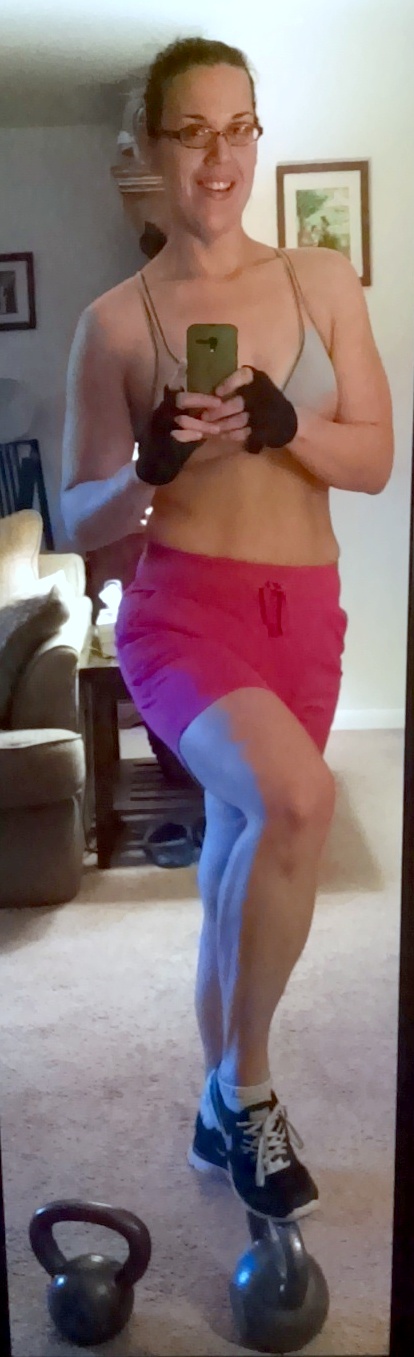
I am not a fan of exercise. Okay, that’s a lie. I love certain exercise. I love kettlebells. LOVE. I love kettlebells so much I brought my 30-lb kettlebell on vacation with me to my mom’s house. I also love hiking and walking, but RUNNING? Ugh. I mean, I might do a 5k over the summer, but it’s not really something I’m into. Yoga? I might do yoga or pilates from time to time. I dabbled in Tae Bo. I’ve dabbled in a lot of things. But the only thing I’ve found that I have no problem doing consistently is kettlebells.
What are kettlebells, you ask? Well, BodyBuilding.com says the following:
So just what is a kettlebell? A kettlebell is a cast iron ball with a handle attached to the top of it (picture a cannonball with a handle on the top). This design makes kettlebells different from training with dumbbells because the weight of a kettlebell is not distributed evenly, thus creating the need to counter balance and stabilize during your workout (Aha … core strength!).
The most common weight of a kettlebell ranges between 9 pounds and 105 pounds. I start most women with an 18-pound bell, but some of my women in their 60’s use a 13-pound for some exercises and 18 pounds for the rest. Most women I work with work up to a 26-pound bell.
I started with a 20-lb bell, because I don’t have a lot of money to spend on fitness equipment, and I’d been using 10-lb hand weights for months. If I could use 10-lbs in one hand, I assumed I could use 20-lbs in two hands. Turns out for me, I was right, despite a few people (you know who you are) thinking I was being a bit overzealous.
As is the story of my life, I started slow (I am mostly Taurus after all). I began my kettlebell workouts with a simple 8-minute video:
This was a great way to start. The moves are easy to learn, and they have several people to watch, none of which are meatheads. The movements are slow, and are explained well. I did this workout for a couple of weeks, and I realized it was EASY. I needed more if I was going to get any benefit at all, because less face it, 8 minutes isn’t very long. So I upgraded to this FitnessBlender video:
Woo! Talk about working up a sweat! Never before had I had sweat drip down my SHINS while doing strength training. I’d always thought strength training was sitting on a bench and doing biceps curls. But kettlebells combine some cardio with strength training for a full body workout. They’re challenging, and dynamic, and they make me feel like a beast. Doesn’t everyone want to feel like they could take over the world? When I do kettlebells, I am an Amazon, a warrior queen. I am BADASS. It didn’t actually take long for me to outgrow this video, too. The progression I experienced in kettlebells was pretty rapid. Soon a friend e-mailed me a new workout, and I was HOOKED.
It didn’t take me long before I ordered a 30-lb bell. Now I use both in my workouts, with the majority of the time defaulting to the heavier bell. Very soon I’ll be posting my current workouts with instructional videos to show you how to do some more moves, but for now, I hope you enjoy the two videos I’ve posted!
Yay! Welcome to the first guest post! I hate running, but I know a ton of people love it, and run regularly for fun and exercise. You people are crazy, but hey, life takes all kinds. Christina and I met way back around 2006 through a video game called World of Warcraft. At the time, we were both sedentary gamers, both raid healers (Google it, people), and both went to college for architecture/engineering, so we hit it off right away! She even came to my wedding in 2008, despite us never having met in person before, and despite living in another freakin’ country! Neither one of us play WoW anymore, and we’ve both lost a lot of weight and gained health using SparkPeople. We’ve kept in touch throughout the years, and when I asked her if she would like to write a guest post about becoming a runner, she accepted! I hope that if you’re interested in becoming a runner, this will guide you through the task. Enjoy!
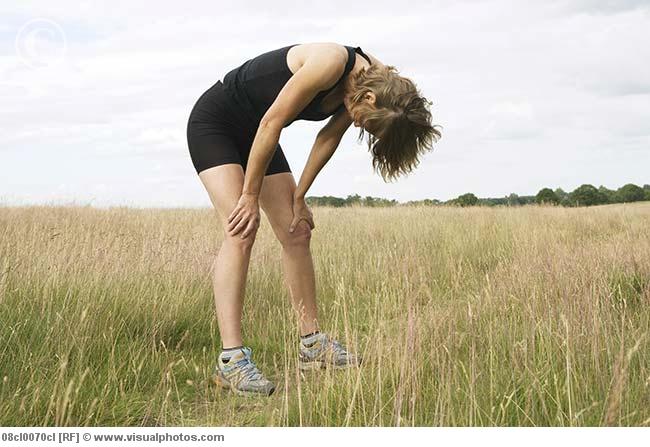
What I would look like if I tried to run. – Andrea
Lessons I Learned While Becoming A Runner
Before November 2010, my running resume included:
Several missed buses that saw me doubled over and gasping at the bus stop
One 10k run when I was 15, where I finished second from last only because my mom was nice enough to let me cross the finish line before her.
One semester of gym class in middle school where I came out of hiding and pushed myself to the front of the pack on cross country runs, thanks to a cute student teacher. There might have been a seed of something there (with my love of running, not with poor Mr. C, who went on to a much less dangerous career in firefighting), but after that semester I settled back into being the short fat girl who wasn’t good at gym.
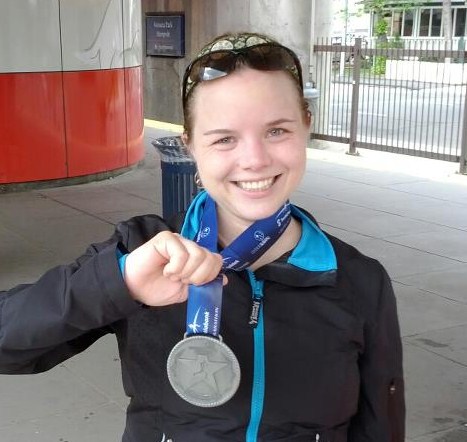
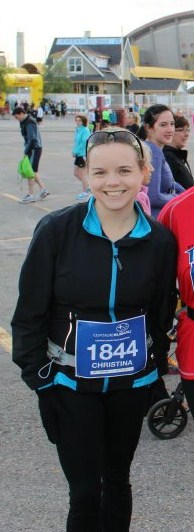
Christina S.
In the fall of 2010, I had just started what would become a 45 pound weight loss that took me from the edge of obese to being fit and healthy. I was a couple weeks into changing my diet and tracking my food when I decided to brave the little fitness room in my apartment building. It was a disaster. I lasted through seven minutes of flailing and gripping the handles on the treadmill before I finally gave up. To make matters worse, my worst gym fear came true when one of my neighbours came over and asked if I was okay. “Maybe you should slow down a bit, you look like you’re going to be sick,” he said. I was humiliated. I still don’t know how I managed to make it back down to the gym the next day, but not giving up on it ended up being one of the closest things I’ve had to a life changing decision.
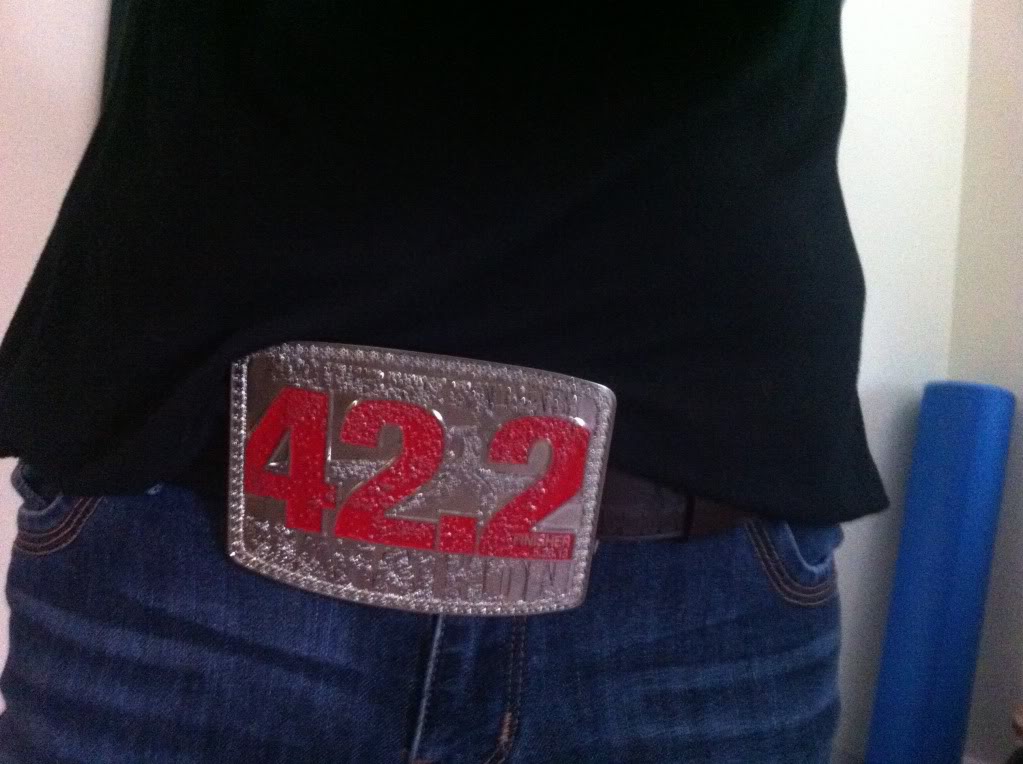
I did manage to get back on that treadmill, this time following some good advice and a Couch 2 5k program. Once I completed that, I decided to keep adding distance. I overcame my fear of people in cars seeing me, and ran outside for the first time. I impulsively signed up for a road race (I said my finger slipped and hit the 10k distance instead of the much more manageable 5k), and learned what it feels like to be a rock star at the finish line, no matter what your time is. I signed up for a half marathon, and began to learn a whole new level of running and training, as well as discovering the social side to the activity. And then, 27 months after that first treadmill run, I ran my first full marathon.
I was running!
Here are a few of the lessons I learned along the way:
1. Don’t be afraid to suck.
When it came to fitness, the biggest thing hurting me was my pride. I was overweight and inactive, but I had a picture in my mind of what someone my age should be able to do and I expected myself to do it. Every few months, I’d get inspired to make a change, hop onto some piece of gym equipment, destroy myself, and then give up because I simply wasn’t good enough. After that first bad run, I asked for advice and someone pointed me toward a beginner’s program called Couch 2 5k. There are several variations out there, as well as Learn to Run clinics and beginner’s groups. Most of them start with intervals of walking and running; Mine was four minutes of walking and 60 seconds of running, repeated four times. I’ve run in -30 blizzards (I’m Canadian, we’re kind of dumb that way), but by far the hardest ‘run’ I’ve ever done was that first C25k run. Four minutes of walking on the treadmill felt like an eternity, and my face was glowing red from embarrassment. Looking back, it shouldn’t have been, but I had a huge mental block about starting slow. Exercise was supposed to hurt, right?
What beginner’s programs do is build a strong foundation. If you go top heavy, or try to do too much too soon, you run the risk of injuring yourself, or learning how to hate the activity. The program I followed took eight weeks to get to a 45 minute 5k with walk breaks. I ended up taking 10, because I had to go back and repeat a couple weeks before I was able to move on. Those 10 weeks gave me a template for how to increase my distance and intensity, as well as teaching me how to work toward a goal in running. I’ve had injuries over the years and I’ve had periods where I’ve cut back on running, and starting slow taught me how to pull myself back enough to reset and get going again.
2. Equipment matters.
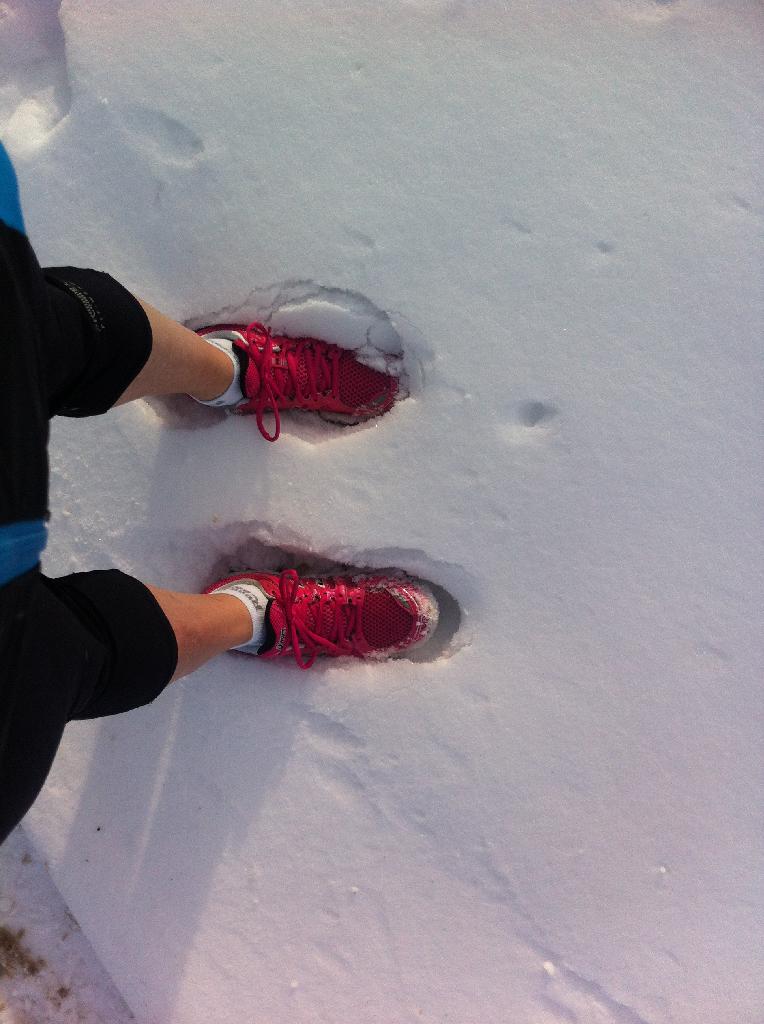
Running is free, right? Don’t tell my bank account. Running can be less expensive than joining a gym or other activities that require more equipment than your legs, but gear does matter. You don’t have to go all out and immediately buy expensive tech shirts or spend $60 on a pair of compression socks, but you’ll want to have a proper pair of shoes. A good running store will have staff who can fit you properly and will be able to watch your gait as you walk/run. There’s no single brand of shoe that’s right for everyone, and the most expensive pair on the wall isn’t always the best for your foot. You may have to play Cinderella as you try 20 different pairs, but finding the right shoe is completely worth it. Going from a cheap generic gym shoe to a proper running shoe felt like switching to running on rocket-powered marshmallows.
Only a Canadian.
When it comes to buying running gear, it helps to prioritize. Shoes are number one. Clothing depends on personal preference and the conditions you’ll be running in. In general, you want to go for moisture-wicking technical fabrics instead of cotton, but how much you spend on what pieces depends on your personal comfort: I’m fine with cheap pants, but I splurge on blister-preventing socks and good sports bras. I run in cold weather a lot, so I’ve learned that I’m better off layering less expensive clothing than going for one super expensive extreme weather jacket. If you get into race training, or if you like numbers, a sport watch that keeps track of pace, distance and heart rate can be a good investment – But there are plenty of inexpensive apps that will do a decent job of GPS tracking as well. Like any activity, it helps to get into it a bit before you start dropping piles of money, so I’d always say to start with the shoes, then pay attention to your needs and comfort and go from there.
3. Have a plan.
On my wall, I have a 16 week schedule detailing every workout I’m doing for the next four months leading up to my next race. That’s how my brain works, and I find that having a goal race and a plan leading up to it helps keep me on track in a way that simply going out for a run wouldn’t.
You don’t have to micromanage that much, but it helps to have a goal in mind. I like to use races. It gives me a fixed date and distance to work toward, and a solid accomplishment (with bling!) at the end. There are tons of training programs out there, so if you’re the type who likes to have an exercise plan to follow, race training is an excellent way to do it. Not everyone is into the race experience, but that doesn’t mean you can’t have a goal. Distance is a good one: Can you run a mile? Try to get up to two or three. How fast can you go? How long can you run for? Open Google maps, find a nice location, and see if you can get there on your own two feet. I live in a city with a big river, so when I started running outdoors, I made it a goal to get to a further bridge every couple weeks.
There’s a general 10% rule: Don’t increase your distance, speed or time by more than 10% per week. Using that rule, you can take your starting point and your final goal, and work out a plan to get from A to B.
Beyond just running, it helps to do different types of runs. Some of my runs are almost painful slow, meant to build distance and endurance to the point where I can go for over four hours. Some runs are short and fast to build speed. Some runs involve running up and down hills eight times to build strength and train my heart. Once you get beyond simply running, it helps to change things up. I run five days a week, but each one of those runs has a different purpose and goal. One of my favourites is the Fartlek run, which means Speedplay in Swedish (and not what you end up with when you eat burritos the night before a long run). On a fartlek run, you change up your pace as you go, running steady until you hit that streetlight, then going full out for, say, 200 meters, and then pulling back to half that until the park bench up ahead. They’re fun and can be spontaneous and great for a little challenge when you’re in a group.
4. Don’t neglect Strength and Nutrition
For the longest time, I just ran. I did some body resistance strength exercise when I had a calf injury and my physiotherapist assigned exercises to prevent future injuries, but I never really incorporated it as part of my training plan. After a year where my running stagnated and I struggled with getting the results I wanted, I finally added a proper strength program into my training schedule. After a couple weeks of my muscles being angry with me, I started to notice an improvement. My speeds and my endurance improved, and I felt fitter overall. I’m getting leaner and faster, and continuing to make it a priority as I train for my next race.
The other point of the triangle is nutrition. It’s not uncommon for people to actually gain weight the first time they train for a longer distance race. I did. You’re putting your body through a lot of work, and you’re HUNGRY. It’s easy to forget about nutrition when you’re training as hard and for as many hours as you are, and that can lead to weight gain. It’s a bit of a wake-up call to realize that there’s a difference between eating a little more to fuel a long run, and shrugging off several high calorie meals (and extra treats) per week because of that one long run. It’s about quality, and if I need to eat more to fuel myself, I’m going to do it with good quality calories while leaving the treats for after the finish line and other special occasions.
5. Go social. Or not.
One of the unexpected benefits of running for me was the social side of it. I’m an introvert who got most of my social activity through gaming, so the idea of joining a running group was terrifying. I signed up for my first clinic when I decided to run a half marathon, because the distance was a little further than I felt comfortable training for on my own. The clinic itself was terrific: It came with a good training plan, instruction, guest speakers, a leader with tons of experience, and great group support. The group support aspect is important when you start pushing yourself into new territory. I’ve had plenty of runs where I would have slept in if someone hadn’t been waiting for me at 8:30 am on a chilly February morning. There’s nothing quite like giving a high five as a group member crosses a new long distance for the first time, and the group pick-me-up when you’re at kilometer 24 of a 26k run is a huge boost. I push myself harder and I’m more disciplined when I’m in a group, and when I’m looking at improving rather than holding steady, that’s important. Plus, it’s given me my Sunday coffee group and medal show-off and ‘carb replenishment’ (Guinness) parties after a race. I know that if I hit the running paths downtown, I’ll see friendly faces along the way, and that I can always wave at someone dressed in tights and obnoxious colours.
On the flip side, running can be a great solo activity. It can be good thinking time, or run out your stress at work time. No matter how bad my day, I almost always feel better after I get out for a run. I might not believe that before I go (I have a post-it note on my computer at work reminding me), but I find there’s nothing better for clearing my mind. I started running for weight loss and continued because I enjoyed it. Now I do it because it’s an important part of my life, and I feel something is missing without it.
That’s kilometers, people.
6. PS: It doesn’t have to be running.
I have a co-worker who likes to sigh and say “If only I liked running…” when talking about weight loss. The truth is, not everyone does. I used to buy exercise videos. I’d plug those things into my VCR and sweat through them, hating every minute. I went to aerobics classes and stumbled around like a drunken elephant. When I started losing weight, I had lots of people try to talk me into Zumba. It seemed like fun, but it just wasn’t for me. I’m an uncoordinated klutz, and if I’d insisted on losing weight through Zumba and bodyjam classes, I wouldn’t have gotten very far. The best exercise for weight loss and fitness is the one you will do. It’s the one you can still see yourself doing five years from now at a healthy weight because you just like doing it. There are absolutely mornings when I look out the window and make rude gestures toward the weather, or days after work when I just want to go home instead of pulling on running tights in a bathroom stall, but there’s a feeling I get when I’m pushing myself across the pavement using my own two legs that just feels right. For someone else, that feeling might come from cycling down a mountain, or pulling themselves through the water, or dancing, or trapeze. Your body just wants to move.

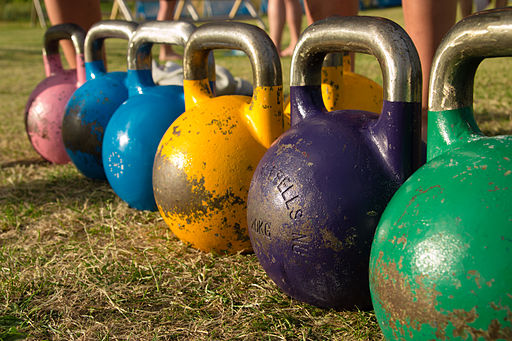
 So just what is a kettlebell? A kettlebell is a cast iron ball with a handle attached to the top of it (picture a cannonball with a handle on the top). This design makes kettlebells different from training with dumbbells because the weight of a kettlebell is not distributed evenly, thus creating the need to counter balance and stabilize during your workout (Aha … core strength!).
 A Measured Life